


Embedded Systems for Manufacturing
Build or modernize the embedded systems that keep production lines running: sensors that collect data, edge devices that process it in real time, and firmware that turns it into precise control.
Ready to build or modernize your embedded system?

Full lifecycle support: hardware selection, firmware architecture, embedded development, testing, and CI/CD deployment.
A MedTech leader migrated outdated firmware to a modern toolchain and added automated testing and CI/CD. An industrial IoT client scaled to managing 10,000+ connected devices with OTA updates and zero downtime.
Schedule a call to hear how.
Embedded in manufacturing: a central role, not a supporting one
Embedded systems are the specialized computers behind manufacturing automation: reading sensor input (temperature, pressure, vibration), controlling machines with millisecond precision, and feeding production data into the decisions your team makes every day
That role is growing. Digital transformation in the manufacturing sector depends on embedded technology to connect the shop floor to the systems above it, from MES to ERP to the AI models increasingly used for quality control and planning
A few reference points on where the market is heading:
- The embedded systems market is projected to exceed $250 billion by 2032.
- IoT-enabled production lines can reach up to 30% greater efficiency.
- Edge computing is expected to process 70% of enterprise data by 2028, cutting the round-trip to the cloud for time-critical decisions.
The practical upside for a manufacturing business: reduced downtime, lower maintenance costs, fewer defects, and production data your team can actually use for planning, instead of numbers trapped in a machine’s local display.
Full expertise across development, modernization, and secure operation

Starting a new embedded product or production line
- System Architecture Design
Hardware selection, embedded software architecture, and communication protocols matched to your manufacturing environment and reliability requirements. - Embedded Development
Bare-metal firmware, RTOS, and embedded Linux builds for controllers, sensors, and edge devices on the line. - Performance Tuning
Code tuned for processor speed, memory efficiency, and low latency, so control loops stay precise under real production load. - Power-Aware Software Design
Lower energy consumption and longer battery life for field and mobile devices.
Fixing outdated firmware and enabling predictive maintenance
- Legacy System Upgrades
Migrate aging firmware to modern toolchains without halting production. - Embedded DevOps
CI/CD pipelines and OTA updates across a fleet of devices, so updates stop being a maintenance event. - Testing and Validation
Unit testing and hardware-in-the-loop (HIL) testing to confirm memory, speed, and power constraints are met before deployment.
Real-time monitoring through embedded sensors is what makes predictive maintenance possible: catching wear before it causes a failure, instead of reacting to one. AI-based predictive maintenance can reduce maintenance costs by around 25%, and cut unplanned downtime by roughly 20%.
Case in point: a global equipment manufacturer was stuck on outdated firmware that blocked hardware upgrades. Migrating to a modern toolchain and introducing CI/CD gave their engineering team control back over release cycles.


Secure, connected operations across the plant
- Connectivity
Wired or wireless communication (BLE, Wi-Fi, LTE, CAN, Ethernet) matched to your floor layout and latency needs. - Integrations
API and protocol integration (MQTT, HTTP, CoAP) for seamless data flow to existing MES, ERP, or SCADA systems. - Security by Design
Secure bootloaders, data validation, and encryption layered in from the start, not bolted on afterward.
Cybersecurity is one of the biggest blockers manufacturers name for further automation. Data security has to be designed into embedded systems from day one, not treated as a separate project once devices are already deployed.
Specialized devices for demanding environments
- Purpose-built embedded solutions for wearables, industrial IoT, and robotics applications that off-the-shelf hardware can’t handle.
- Devices designed for safety-critical environments, where reliability isn’t negotiable.
- Case in point: How Kanaan Mapped a Plan to 98% Accuracy in Jewelry Authentication with Industrial AI Workshops
Book embedded system consulting with our experts

For your engineering team: the stack we work with
Firmware
- Bare-metal firmware
- RTOS (FreeRTOS, Zephyr)
- Embedded Linux (Yocto, Buildroot)
- Secure bootloaders
Languages
- C, C++ (low-level)
- Python
- Bash (scripting)
Build
- CMake
- Make
- GCC toolchains
Hardware
- MCUs/MPUs from ST, Texas Instruments, Microchip, NXP, Infineon, Analog Devices (8 to 64-bit architectures)
- Signal measurement, conditioning
Testing
- Unity, CppUTest
- Hardware-in-the-Loop (HIL) testing
- Robot framework
Connectivity
- BLE, Wi-Fi, LTE, LoRa
- USB, Ethernet, CAN, RS-232, RS-485
- UART, I2C, SPI
- MQTT, HTTP, CoAP, HL7, AMQP
DevOps
- Docker, GitLab CI, GitHub Actions
- OTA updates

Why DAC.digital?
Complete Embedded Expertise
Bare-metal firmware to embedded Linux, hardware consulting, connectivity, security, and DevOps under one team.

Built to scale
Modular architecture, systematic unit and HIL testing, and CI/CD pipelines keep devices stable as deployments grow from a pilot to a fleet.
Secure by design
Wired or wireless connectivity, API and protocol integration, and security embedded at every layer.

Track record in manufacturing and industrial settings
From IoT devices to MedTech systems and custom drones, with measurable results: faster releases, OTA updates, and compliance with industry standards.
Example projects
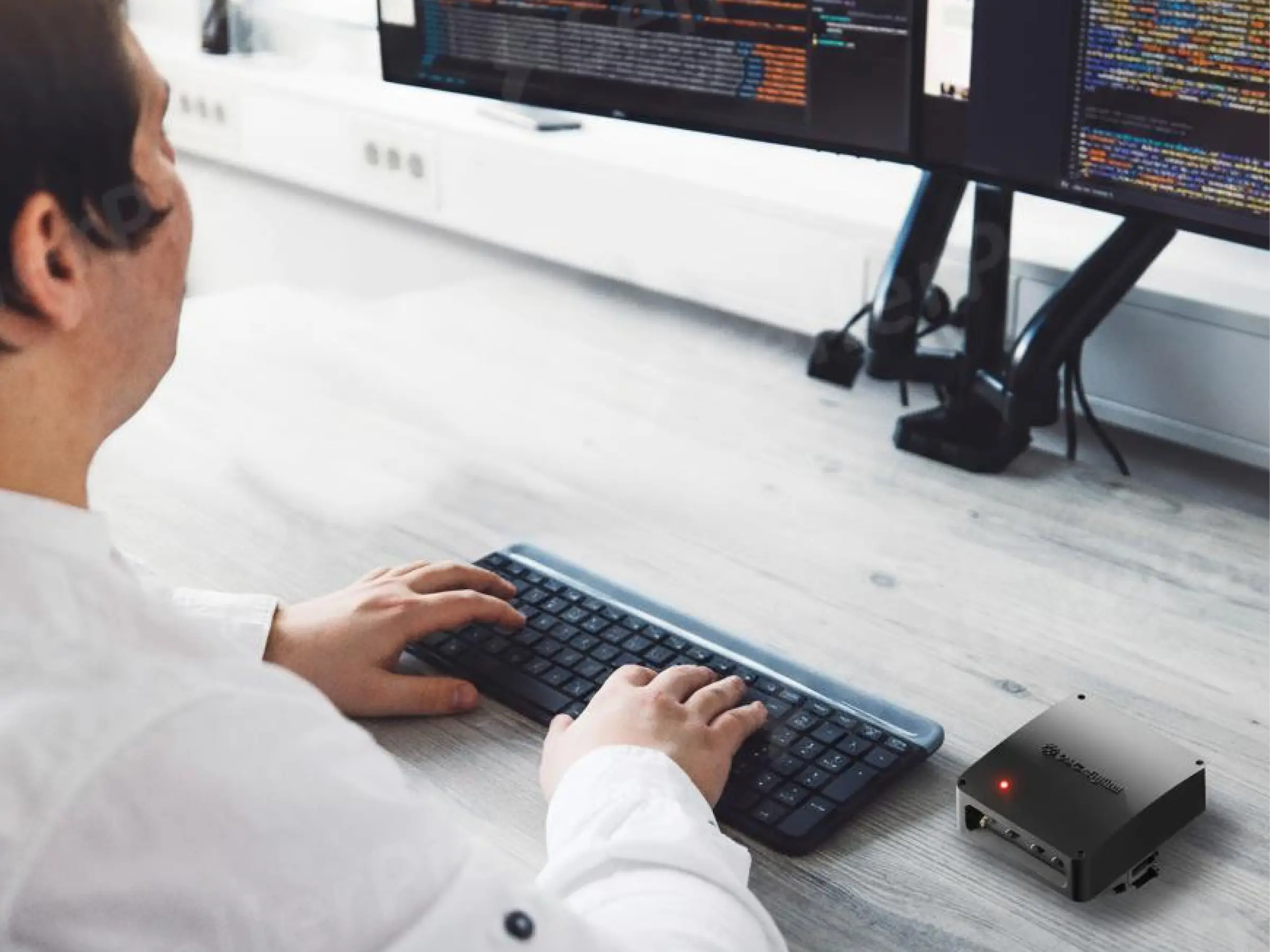
D_Box multifunction device for Industrial IoT applications
A plug-and-play tool to collect and manage IoT data across stationary and mobile setups, built for teams where device connectivity was becoming a bottleneck.
Legacy firmware modernization for an embedded system
A global equipment manufacturer was stuck with outdated firmware that blocked hardware upgrades and slowed every release cycle. Migrating to a modern toolchain and introducing CI/CD gave their engineering team control back.

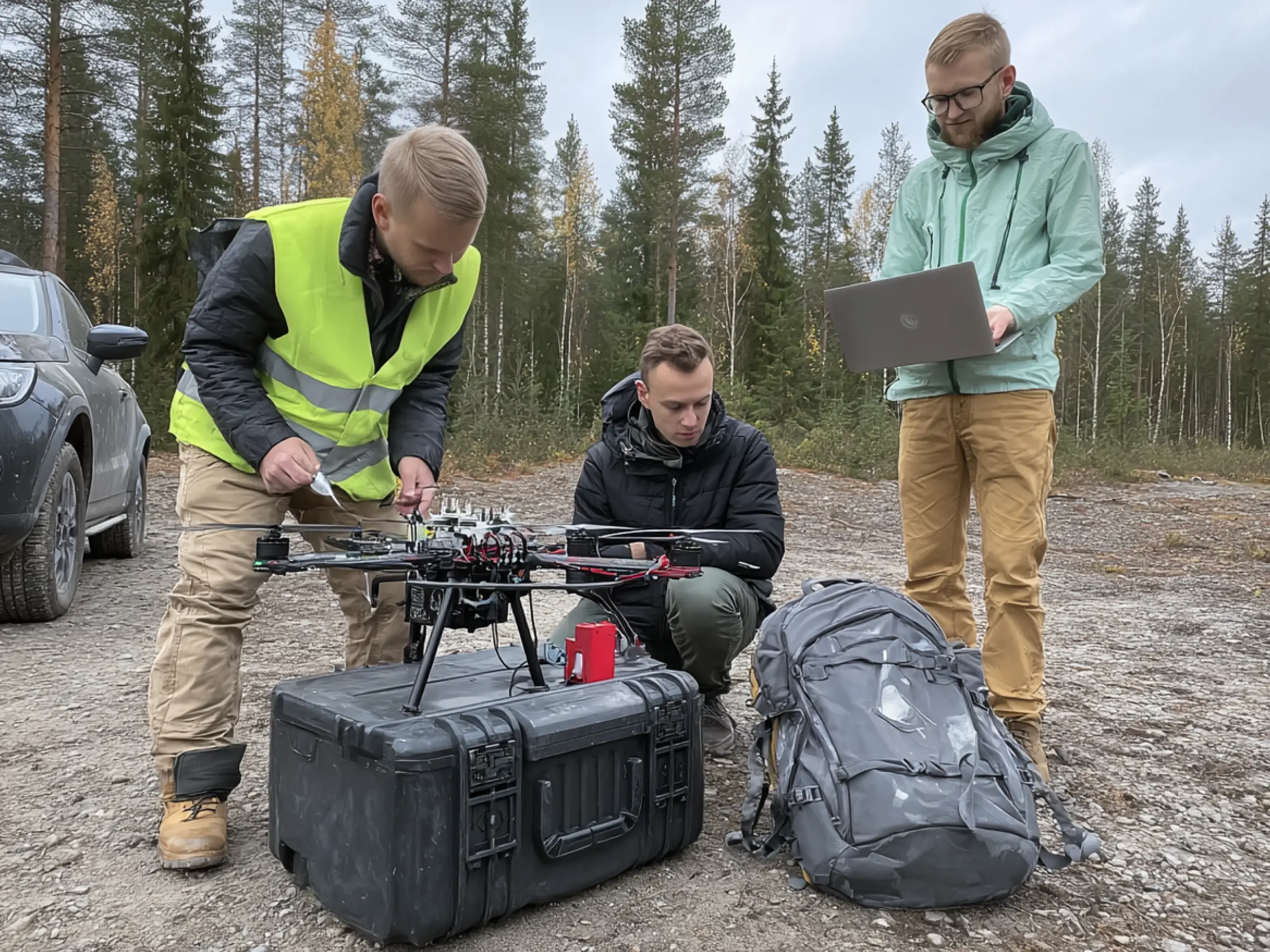
Drone-based embedded system for forest mapping and object recognition
A custom drone system synchronizing LiDAR, RGB, and GPS data to build precise 3D forest maps, replacing incomplete terrain data that led to inefficient harvesting routes.
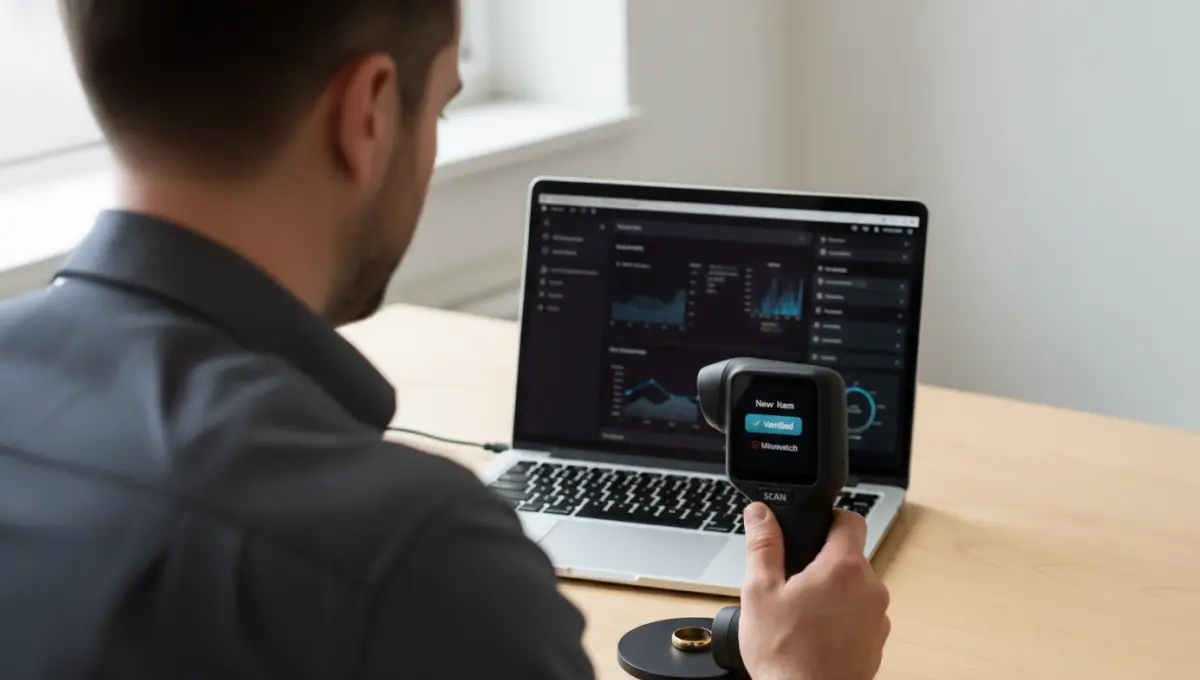
Design Validation of Jewelry Authenticator
A remote and on-site workshop delivered technical feasibility checks and a development roadmap for a device that validates metals in jewelry.
Real-time data and AI that understands your production
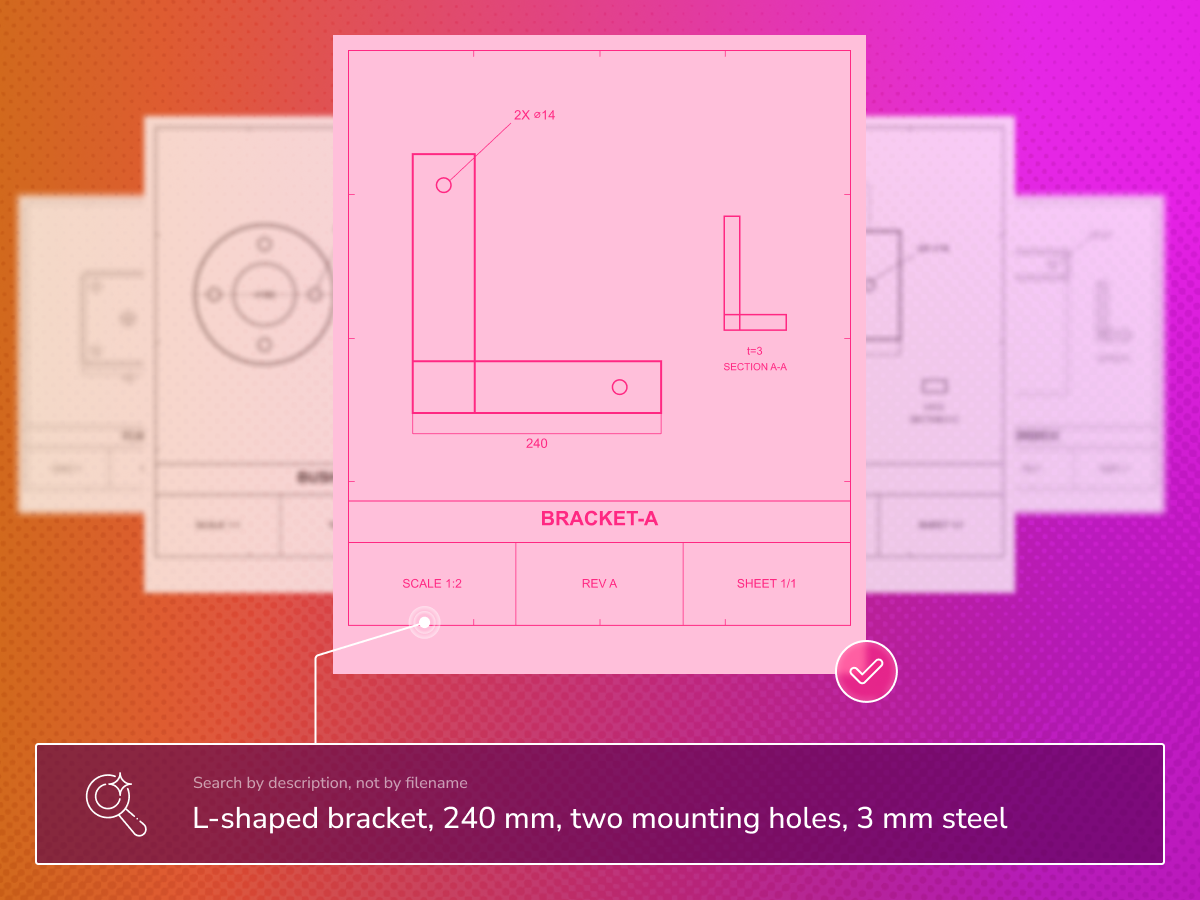
Embedded systems are what collect the production data in the first place: sensor readings, machine states, quality checks at the point of production. That data is also what feeds AI systems further up the stack.
One example: our AI for technical drawings and CAD file analysis solution reads geometry and spatial relationships on CAD files to automate quoting, nesting, and design change tracking. Embedded systems are the supporting technology that makes this practical on the shop floor: connecting machines, sensors, and production data to the AI layer without disrupting the tools your engineers already use.
If you’re evaluating AI for engineering or production workflows, embedded systems are usually the first piece to get right.
Subscribe our Newsletter
Anything else we should know?
Optional, and you are already subscribed. It only helps us write for the right reader.
You are on the list.
The next one lands in your inbox. Nothing else — we do not pass your address on.
FAQ
Embedded systems run the controllers, sensors, and edge devices behind most manufacturing processes today. They read input from the machine or the line, apply logic locally, and send an output back within milliseconds. That’s what makes them central to industrial automation across the manufacturing industry, not a background component. In day-to-day manufacturing operations, they’re the layer between physical equipment and everything built on top of it, from SCADA to AI.
Sensors embedded in machines collect data on temperature, pressure, vibration, and machine state, then pass it to local processing before it reaches any dashboard. That’s the foundation for data-driven decisions on the floor: a supervisor gets real insights instead of a raw log file, and engineering teams get structured output they can act on. Without that collection and analysis layer, most planning still runs on guesswork.
Yes, mainly through two paths: catching problems early (fewer defects, less rework) and cutting the manual work that eats into overall productivity. Real-time monitoring reduces errors that would otherwise reach a customer or a downstream process. Combined with predictive maintenance, this is usually where the cost case is easiest to make to a business sponsor.
They help indirectly. Automating repetitive checks (measurements, defect flags, routine maintenance triggers) frees up skilled staff for the work that actually needs a person. Some of that automation now includes AI agents that monitor sensor data continuously and only flag exceptions, which matters when a plant can’t fill every technical role it needs.
An embedded device typically handles the real-time, low-latency part: reading sensors, controlling actuators, running lightweight models at the edge. Machine learning models that need more compute, like those used to predict failures or classify defects, usually run on a server or in the cloud, fed by data the embedded layer collects. Seamless integration between the two is a design decision, not something that happens automatically, and it’s usually where projects succeed or stall.
Process control, predictive maintenance, quality inspection, and asset tracking across supply chains are the clearest fits. Any environment where product quality depends on precise, repeatable control, sheet metal, electronics assembly, food and beverage, benefits from embedded systems doing the moment-to-moment work a person can’t do reliably by hand.
Competing in a global market means matching what competitors already do with real-time visibility and automation. Technological advancements in edge computing and low-power hardware have made embedded solutions viable for mid-size manufacturers, not just large enterprises. For most manufacturers, embedded systems are no longer optional. They’re tied directly to business goals like reduced downtime and margin protection.
The recurring challenges: connecting new devices to legacy equipment, keeping data secure across a growing device fleet, and validating that firmware performs reliably under real production conditions. Addressing them usually means starting with a scoped pilot instead of a plant-wide rollout, testing on the actual hardware-in-the-loop before deployment, and building security in from the first line of firmware rather than adding it after the fact. That approach is where most of the genuine innovation happens, in the integration work, not just the sensors themselves.
Ready to chat about your project? Describe what you’re working on in the form below.
Contact us!
Send us an email: [email protected]