


Conversational AI in manufacturing: natural language access to your ERP, MES and CAD data
Conversational AI in manufacturing gives engineers, planners, and shop floor teams a natural-language interface to ERP, MES, PLM, quality records, and technical drawings, without touching a single system. For manufacturing enterprises in regulated or technology-intensive sectors pursuing smart factory and Industry 4.0 goals, it is one of the most direct ways to raise operational efficiency without adding headcount.
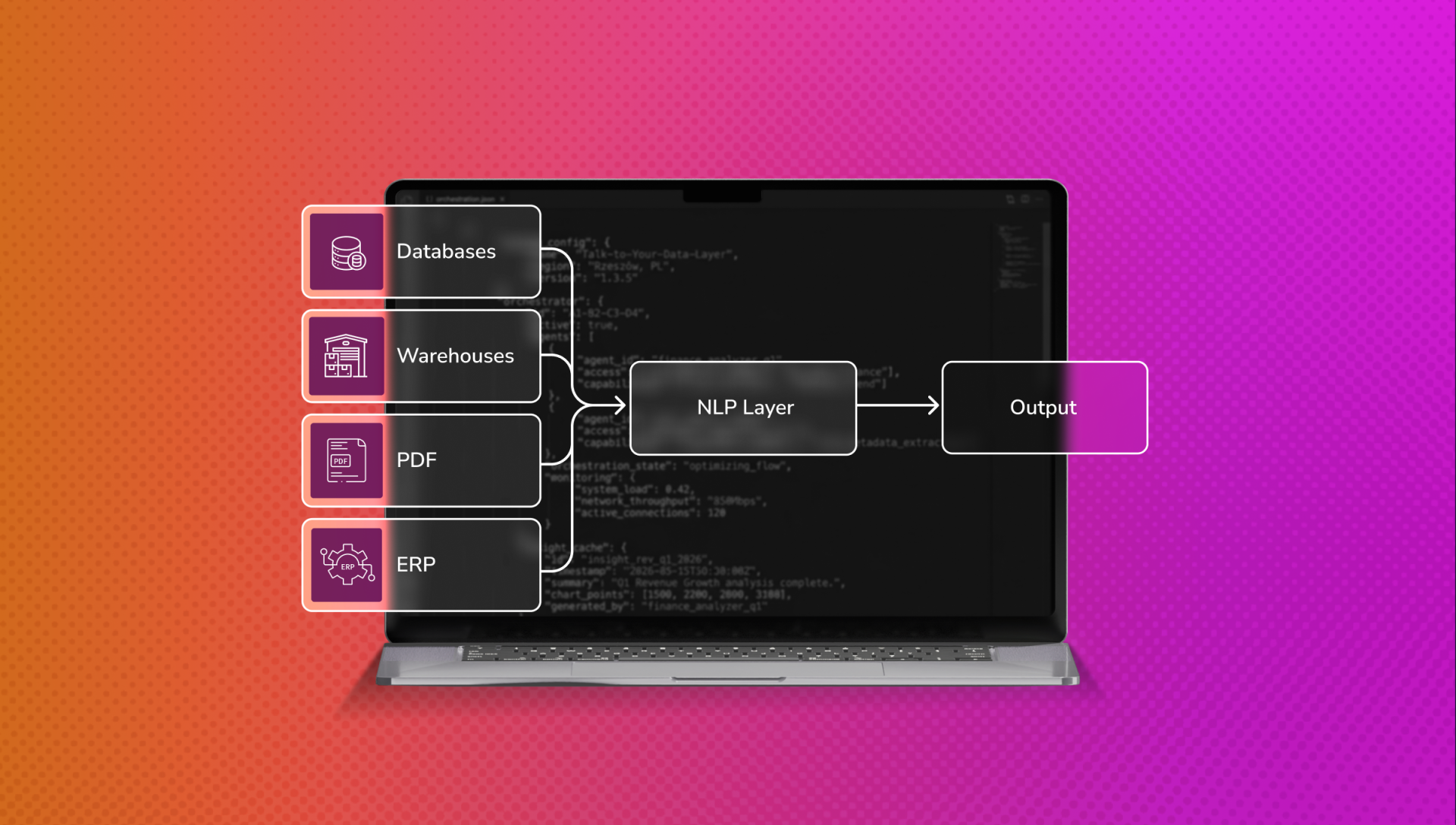
Built on artificial intelligence and machine learning, the underlying AI agents surface governed answers from your existing infrastructure, with the same access controls and approvals already in place. That matters most in plants where data is scattered across legacy systems, skilled labor is limited, and tribal knowledge slows decisions or disappears with staff turnover. Here is how conversational AI in manufacturing works in practice: connecting to core factory systems, interpreting production data and technical documentation, the architecture and deployment phases to plan for, and how the interface reaches your teams, whether that is a chatbot, a voicebot, a custom app, or an embed inside tools you already use.
The problem: Manufacturing data is everywhere, and still out of reach for the people who need it
Engineers and planners are the bottleneck
Every “can you check the drawing, quote or order status” question lands on an already stretched engineer or planner. Skilled labor shortages make this worse: as many as 2.1 million US manufacturing jobs are projected to stay unfilled by 2030 (Deloitte and The Manufacturing Institute), so the same small group ends up answering everything. By the time the answer comes back, the shift has moved on, the customer has called twice, or the decision has already been made without it, hurting both customer experience and decision making.
Critical knowledge lives in formats standard tools can’t read
Technical drawings, ERP exports, PDFs, scanned quality reports, sensor data and machine logs, much of it still sitting in legacy systems, make up most of what a factory actually runs on. Dashboards, BI tools and generic chatbots treat this production data as plain text at best, or ignore it completely.
Tribal knowledge is walking out the door
Experienced technologists and planners carry years of undocumented know-how about tolerances, suppliers and past issues. When they retire or move on, that knowledge doesn’t transfer, it disappears with them, along with the institutional knowledge new hires would otherwise lean on during employee training.
The solution: A conversational AI natural language interface built on top of the systems you already run
Integrating AI with legacy systems is one of the biggest obstacles manufacturers face when adopting AI solutions. Implementing conversational AI technologies usually means investing in infrastructure and skilled people most teams don’t have spare, which increases the pressure to deploy without replacing the core infrastructure already in place. That’s why this is built as a layer, not a replacement.
Key benefits:
- Connects to ERP, MES, PLM, QMS, cloud data warehouses, and technical drawing files
- Reads technical drawings, quotes and specs the way an experienced engineer would, not just OCR, but structure and meaning
- Respects existing access controls and approval workflows
- Delivered through a chatbot, voicebot, custom interface, or by integrating conversational AI directly into the systems your teams already use
Phase 1: First live workflow
A discovery agent maps one data domain, technical drawings, quoting data, or production data from your MES, within four weeks. This is where conversational AI technologies prove out fastest: on one well-scoped domain, not the whole factory floor at once. A designated product owner reviews, corrects and improves the system’s answers without developer involvement.
Phase 2: Expansion and hardening
Expansion to three to five additional data domains, moving, for example, from drawings to quoting, then to production intelligence and document processing. This is also the stage where things like predictive maintenance alerts or quality control automation can start drawing on the same governed data layer instead of being built as disconnected, one-off AI models. Production-grade security is added: audit logging, PII handling, identity propagation.
Why it works
Attaches to your infrastructure. Doesn’t touch it
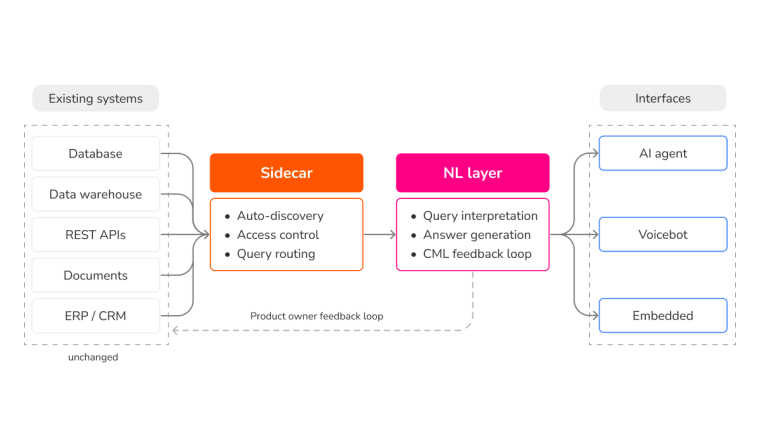
A sidecar component connects to your existing ERP, MES, PLM and other enterprise systems and automatically discovers what’s available. Nothing in your production environment changes.
Understands drawings and documents
A semantic and conversational layer, built on machine learning algorithms trained on engineering content rather than generic deep learning models, sits on top of technical drawings and unstructured documents, so teams can ask questions and filter for specific elements instead of receiving a raw data export.
Turns tribal knowledge into a shared, searchable resource
Every question an engineer answers and every troubleshooting conversation a technician has becomes part of a shared, searchable resource instead of disappearing when they log off. Over time, the system becomes a centralized repository of institutional knowledge that used to live only in people’s heads.
Gets more accurate and improves operational efficiency
A designated product owner reviews and corrects the system’s answers through a simple admin panel, so accuracy and time saved compound with every correction.
Every user sees exactly what they’re supposed to see
Access permissions are enforced at query time. A planner at one plant sees their plant. The roles and rules already in place are applied automatically.
Delivery options
Whichever label your team uses for it, an AI assistant, an AI chatbot, or an agentic interface, the underlying agent and the data behind it are the same.
Agentic interface
A conversational interface for engineering, planning and quality teams, accessible via browser or internal portal, helping with production planning and broader business processes by giving teams faster access to governed answers.

Voicebot
It can also support equipment maintenance teams by surfacing maintenance history and machine logs hands-free, helping them respond faster and reduce downtime.

Custom interface
A purpose-built UI for a specific workflow, for example, drawing review, quoting, or investigating quality issues in manufacturing processes by tracing root causes against production parameters.
Embedded in existing system
The natural language layer lives inside the ERP, MES or PLM your teams already use every day, which is often the most practical way to automate routine tasks without changing daily workflows.
A strong fit for manufacturers who already run ERP, MES or PLM systems
Fit criteria:
Particularly relevant for teams already investing in smart factory and Industry 4.0 initiatives.

Your data exists in digital form
Drawings, ERP records, quality reports, machine logs.
Your engineers and planners are a bottleneck
Teams spend hours on requests that should be self-service.
Critical information is locked in drawings, PDFs or exports
Data standard BI and ERP search can’t reach.
You want to expand access without expanding headcount
The goal is self-service, not more analysts. In a manufacturing business, that can also extend to supply chain management tasks like automated inventory checks and order information requests.
Your teams are affected by skilled labor shortages or high turnover
Repetitive tasks like answering the same questions or re-checking the same drawings are eating time that should go to higher-value work.
A fit if your supply chains are complex and you need better visibility into supply chain tracking, inventory levels, and order management, which is often where AI-driven visibility pays off fastest.
You sell equipment or spare parts and want OEM customers to get round the clock support
Without every question routing through your service teams, the same way our agents already handle client-facing conversations in other industries. Better responsiveness here also supports higher customer satisfaction.
If you need agents that take action, not just answer questions, see Agentic AI in Manufacturing.
Already trusted us










How we’ve applied the same agentic architecture elsewhere
TalkTwelve, Legal services, UK
Problem: A legal platform needed an AI agent that could collect unstructured user input – a client describing their legal problem in plain language – and turn it into a structured brief for the right solicitor, matched automatically from a database.
Solution: The agent queries three sources simultaneously: a lawyers database, previous session history, and a legal knowledge base. It selects the best-matched solicitor, drafts the brief, and opens a shared calendar, all before the client picks a time slot.
Result: A 12-minute consultation that previously required lengthy intake forms, repeated explanations, and manual matching.
Eazli, E-commerce platform, Saudi Arabia
Problem: A city-scale e-commerce platform needed to handle complex, multi-step user requests such as product recommendations, space redesigns and purchase completions – all through a single chat interface. A single-LLM approach couldn’t maintain context across steps or run concurrent workflows without breaking down.
Solution: A modular multi-agent architecture: a concierge agent manages incoming requests, a planner breaks them into tasks, and specialised agents execute in parallel. A central registry tracks agent availability in real time. RAG retrieves user context, session history, and product data to keep every response personalised and grounded.
Result: Users get fast, contextual answers even while complex tasks run in the background, and vendors manage inventory across multiple marketplaces from a single interface.
What are other examples of agentic AI development services from DAC.digital?
About DAC.digital
Thirteen years of experience building AI for the manufacturing industry and other real industrial environments.
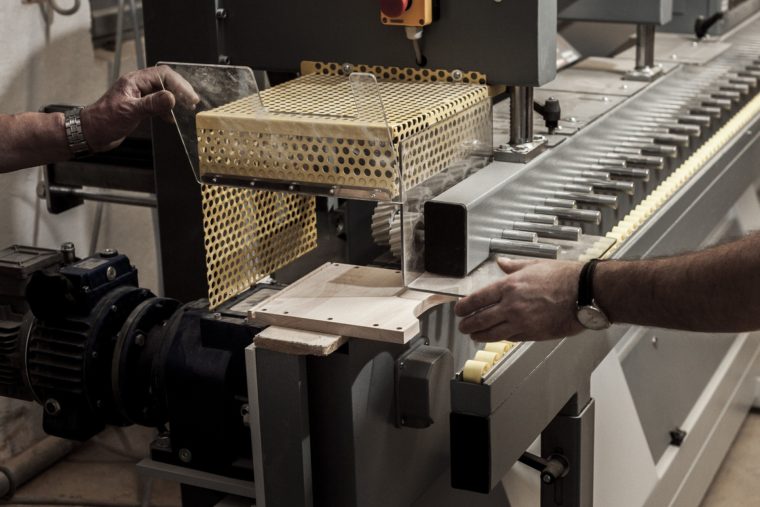
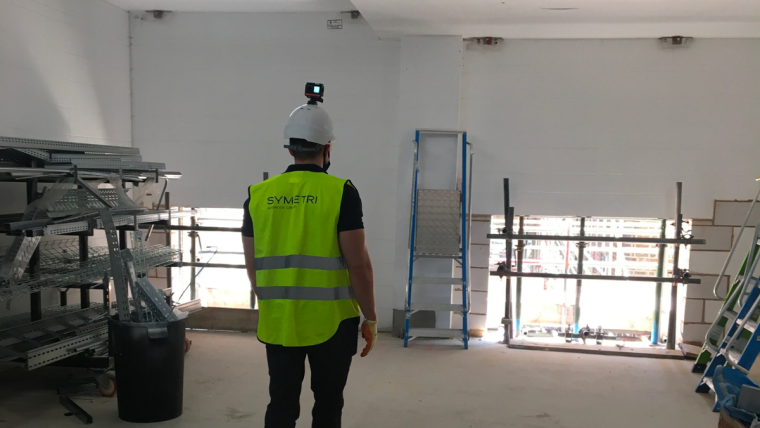
We have built computer vision systems for Komatsu’s autonomous forestry equipment and quality control AI which has eliminated 90% of defects in furniture production. We have also developed automated inspection systems for complex technical assemblies. We are not new to manufacturing AI – AI for technical drawings is our next frontier.
We have 150+ engineers on board (including ML and computer vision specialists), and have been recognised as one of Deloitte & FT’s fastest-growing companies four times. We are ISO 27001 certified and offer enterprise-grade security.




Subscribe our Newsletter
Anything else we should know?
Optional, and you are already subscribed. It only helps us write for the right reader.
You are on the list.
The next one lands in your inbox. Nothing else — we do not pass your address on.
FAQ
Does this require changes to our ERP, MES or PLM systems?
No. A sidecar component attaches to your existing endpoints without modifying your systems.
Does this replace tools like predictive maintenance or quality control systems?
No. It sits alongside predictive maintenance, quality control automation and other AI models you already use or plan to add, giving people one natural language way to ask questions across all of them instead of replacing any single system, including AI systems that predict failures before they cause downtime.
What data sources and file formats are supported?
All major enterprise data sources: ERP, MES and PLM systems, cloud data warehouses, relational databases, REST APIs, PDFs, spreadsheets, and technical drawing formats such as DXF, DWG, STEP and scanned/PDF drawings, confirmed for your specific formats during discovery.
Can it read and answer questions about technical drawings?
Yes. A semantic and conversational layer sits on top of drawings and bills of materials, so teams can ask questions in plain language instead of manually opening and searching files.
How is access control handled?
Existing user permissions are enforced at query time. Users only see the data and drawings they’re already authorized to access.
What does the product owner actually do?
They review the system’s answers through a simple admin panel, flag inaccuracies, and confirm correct interpretations, typically around six hours a week.
Can it help with employee training and onboarding?
Yes. Because the system already holds a searchable record of past questions and troubleshooting conversations, new hires can ask it what they’d otherwise ask a senior colleague, which shortens employee training and onboarding time.
What happens after Phase 2?
The platform is designed to expand. Each new plant, data domain (drawings, quoting, production intelligence, document processing) or use case is additional scope, for example workforce management or other AI systems built on the same governed data layer.
How accurate are the answers?
The more teams talk to their data, the more accurate the system becomes — every product owner correction improves future interpretations.
Is this compliant with GDPR and data residency requirements?
Compliance and IP-handling requirements are defined in Phase 1. The architecture supports GDPR, data residency constraints, controlled handling of proprietary drawings and specs, and audit logging.
Can it be embedded in tools we already use?
Yes. The AI agent can be embedded directly inside your existing ERP, MES, internal engineering tools, or other systems your teams already rely on.
Ready to tell us about your project? Describe what you’re working on in the form below.
Contact us!
Send us an email: [email protected]